

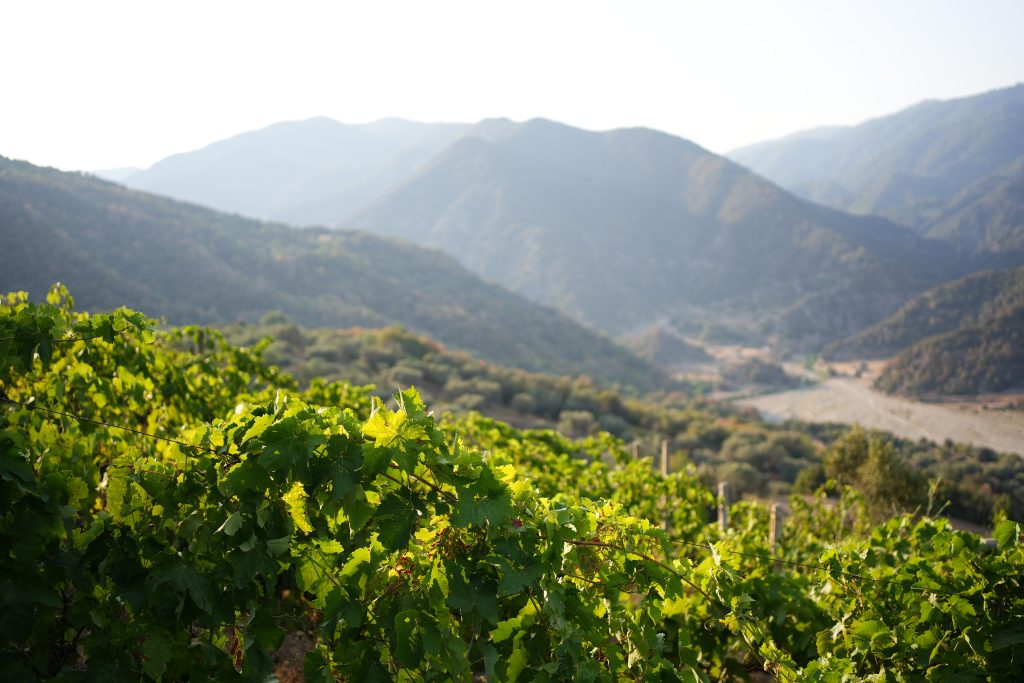
Bivongi DOC
Grape varieties
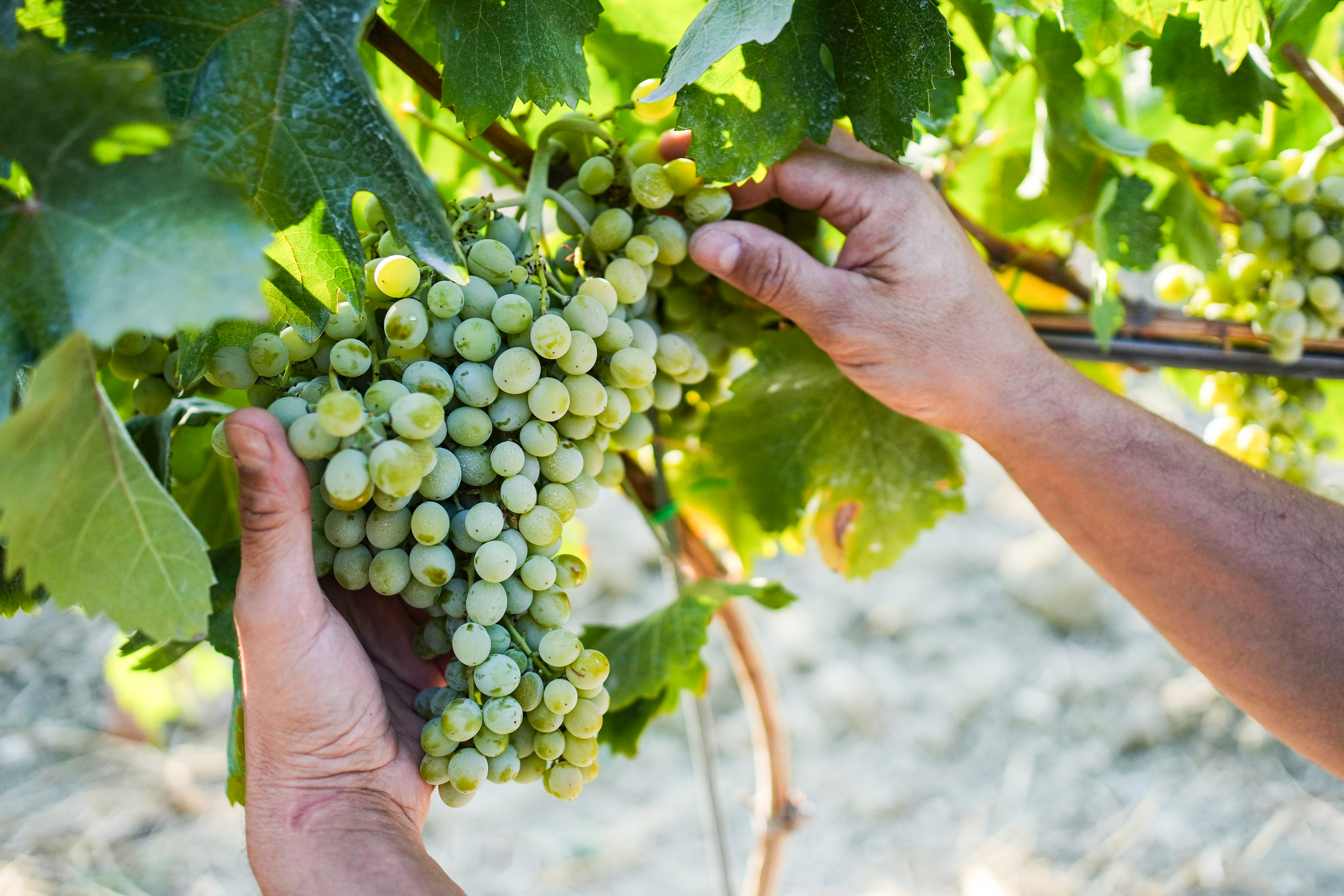
Bivongi DOC Rosso is made from a blend of native red grape varieties that have been part of the wine-growing tradition of Calabria’s Ionian coast for centuries. The best-known principal varieties are Gaglioppo and Greco Nero.
#1
Gaglioppo
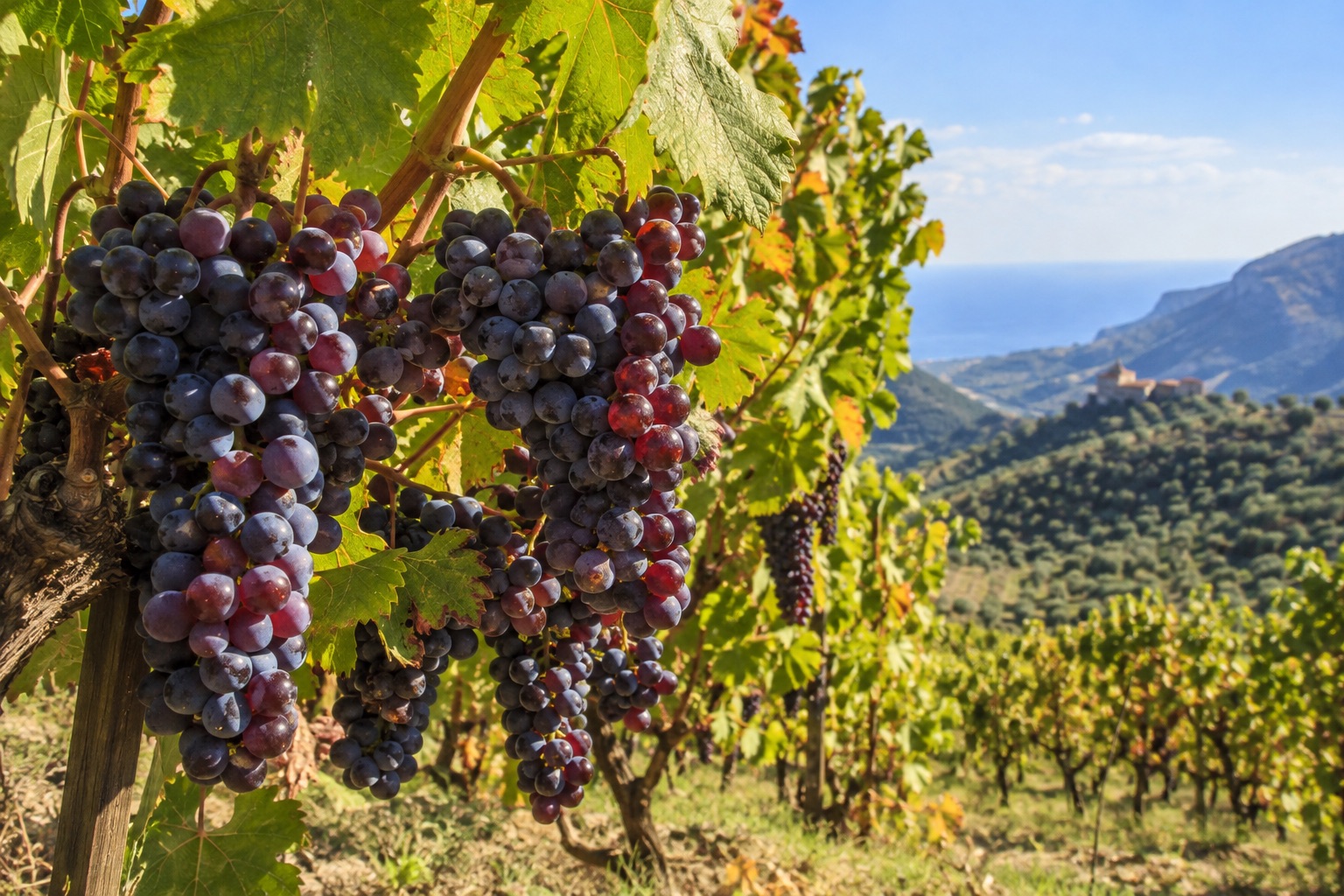
Gaglioppo is thought to have originated in Calabria, near the Ionian Sea, on the hills of Cremissa during the splendour of Magna Graecia, when nearby Sybaris was one of the great wine capitals of the world. Wine pipelines were said to carry it to the city’s port, from where it was shipped across the Mediterranean.
The name Gaglioppo is of Greek origin and refers to the shape of its bunch, which resembles a well-formed foot: Kalos Pedos, or “beautiful foot”. It also recalls the local dialect term for a “closed fist”, owing to the compactness of the bunch.
The most frequent visual descriptors are ruby red, garnet red, violet highlights and orange highlights. Colour and highlights vary considerably, and colour is a particular challenge for wines made from Gaglioppo.
Its characteristic aromas include rose and violet, spices such as liquorice and cinnamon, and fruit reminiscent of berries and stone fruit. On the palate, Gaglioppo wines show good acidity, considerable body and a long finish.
In Gaglioppo wines, colour is the parameter most affected by external factors—clone, rootstock, soil and cultivation technique—and can therefore be improved through precise technical choices, including the use of selected clonal material.
#2
Greco Nero
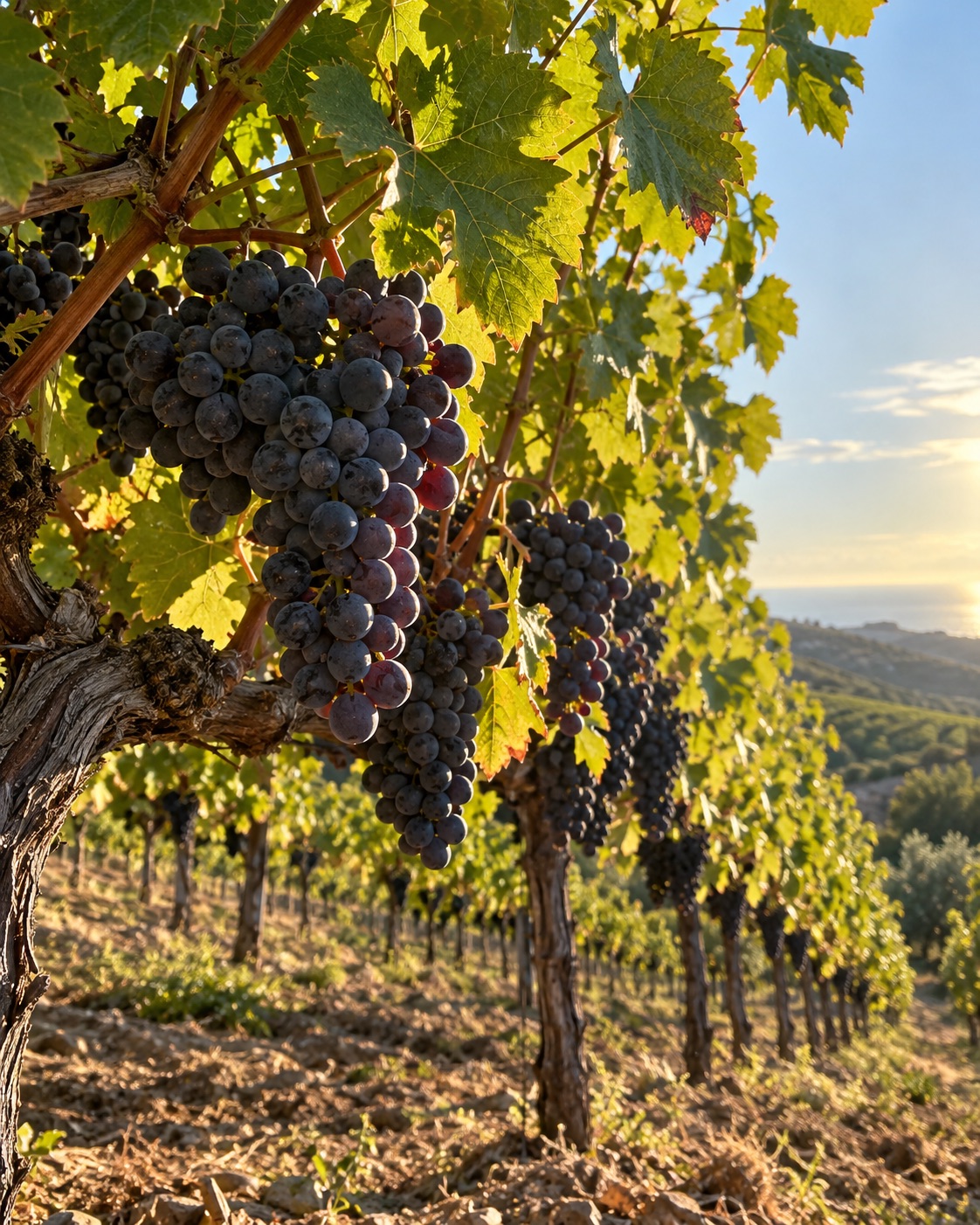
Greco Nero is a native Calabrian black grape belonging to the large family of Greco varieties, which mainly includes white grapes grown and used throughout central and southern Italy. Several hypotheses have been put forward about its origin; as part of this family, it probably dates back to the Hellenic settlement of the 7th century BC, when Greek colonists arrived in southern Italy, founded new cities and gave rise to Magna Graecia.
Vinified on its own, it displays pronounced spice notes of pepper, anise and cloves, floral hints of violet, a fruity palate, agreeable tannins, and an enveloping, harmonious character.
#3
Other red grape varieties
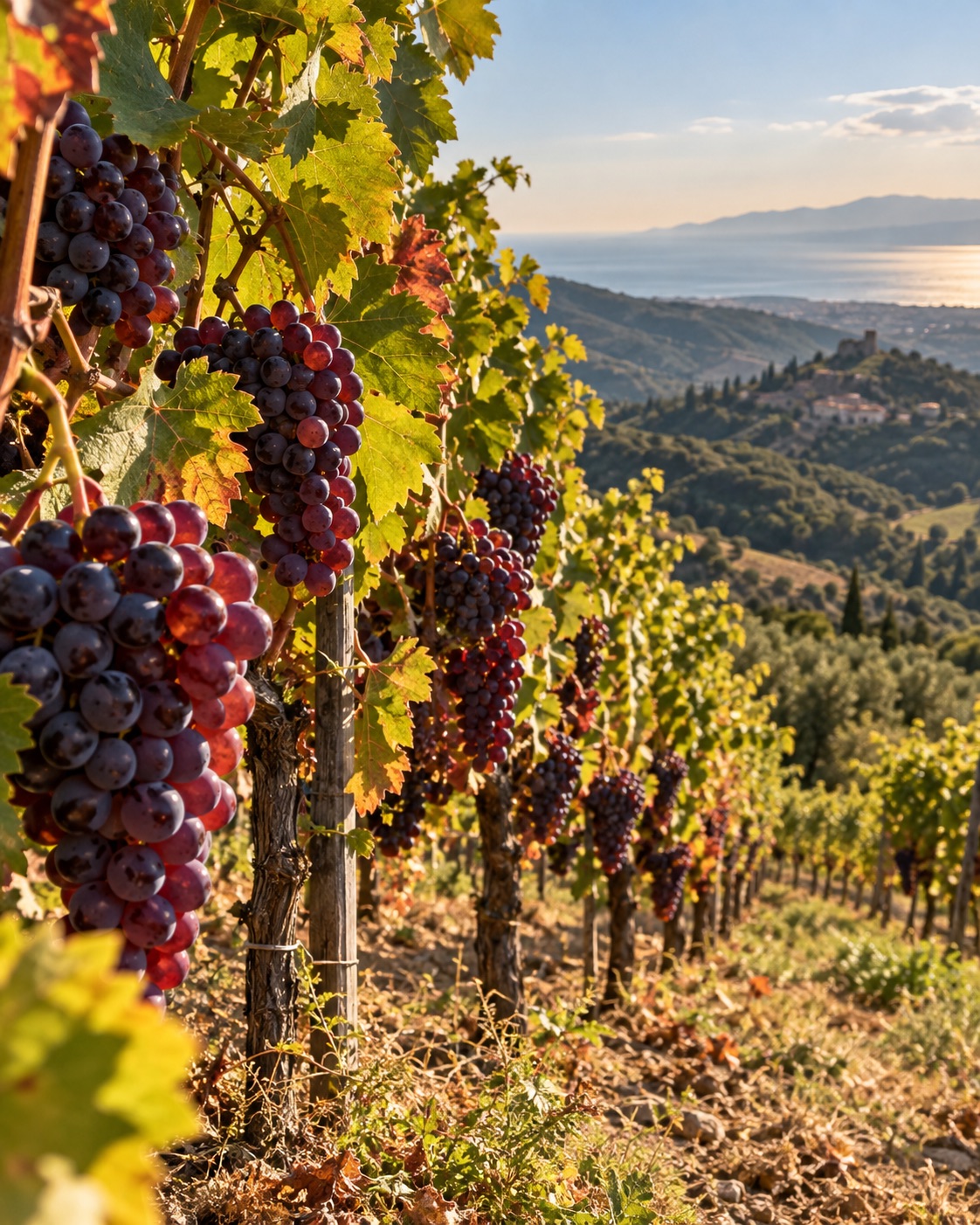
Another variety used in the blend is Nocera, a very ancient grape introduced to the Strait of Messina area during the first Greek colonisation and sharing similarities with the Nerelli family. It produces a wine of great finesse and elegance, with floral and fruity notes and lively freshness; in antiquity it was probably known as Mamertinum.
Calabrese Nero—more commonly known as Nero d’Avola, Sicily’s most widespread native black grape—may also enrich the blend. Finally, Castiglione, a minor native variety found in Calabria for centuries and used principally as a blending grape, may also be part of the Bivongi Rosso ampelographic base.
Bivongi Rosso DOC has a fine ruby colour with garnet hues. Its bouquet is marked by intense fruit notes. On the palate it is harmonious, with a pleasing structure supported by balanced tannins and lively freshness. Because the production rules allow Bivongi Rosso DOC to be made with different proportions of different grapes, each winery produces a wine with its own expression. All, however, share the same root: an honest, strong and gentle soul, like this corner of Calabria descending from the Serre mountains to the Ionian Sea.
#4
White grape varieties
Bivongi Bianco is made from Greco Bianco, Guardavalle and Mantonico grapes, alone or together with Malvasia Bianca and/or Ansonica, as well as other local white grape varieties.
#5
Guardavalle
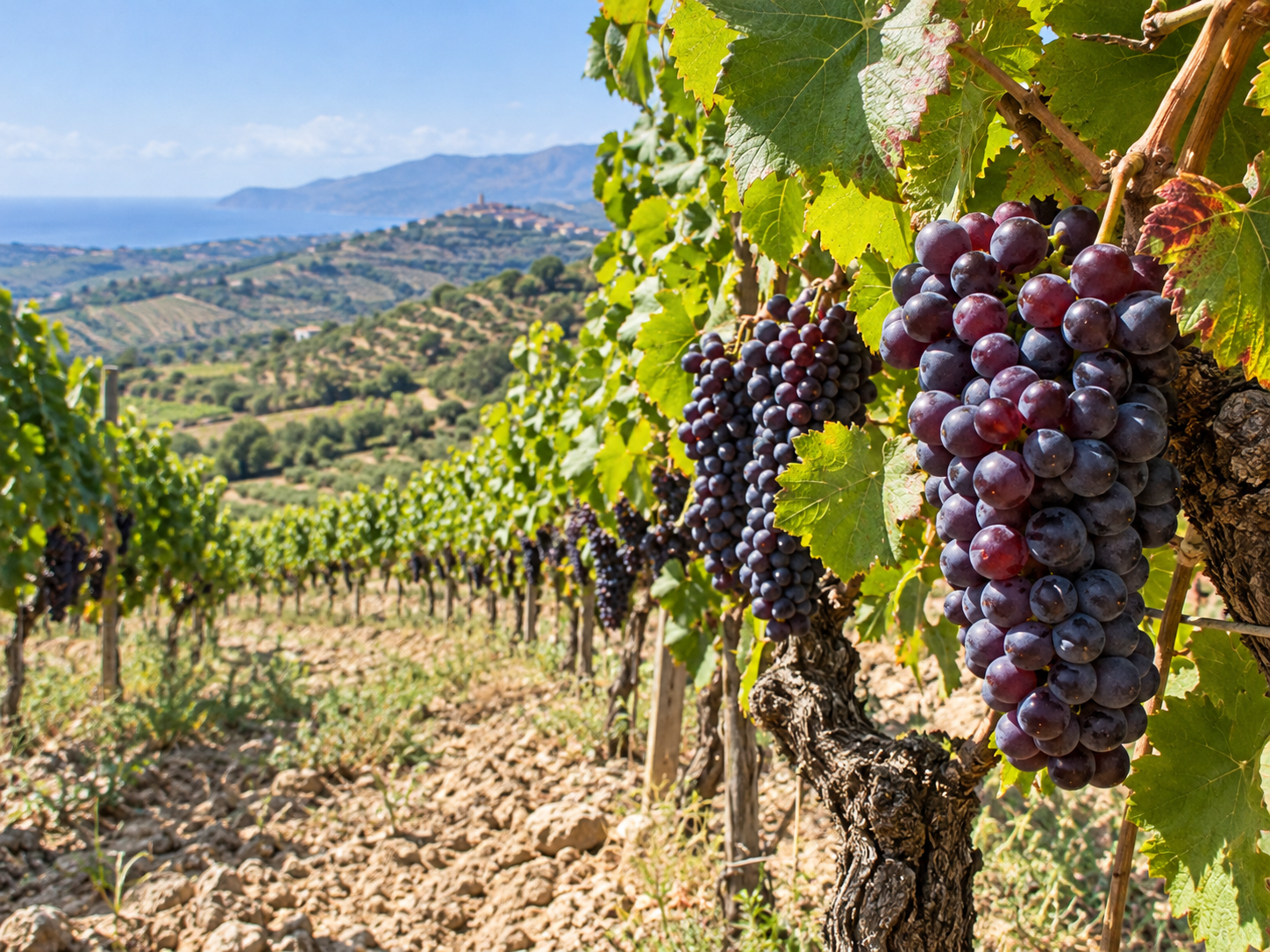
Guardavalle is a native Calabrian grape, grown mainly on the Ionian side of the region in the wine-growing areas of Kalipera, Locride and Bivoncio. Also known as Vardavalli, this native white variety probably takes its name from its preference for hilly sites, where it shows good tolerance to adverse weather and the main vine diseases.
When vinified on its own, it produces a yellow wine with greenish highlights and an intense aroma of toasted hazelnut, although it is usually used as a blending wine. There is no certain historical record of the grape; all that is known is that it has been present in Calabria since the colonies of Magna Graecia.
Guardavalle is generally trained on a trellis or in the traditional bush-vine form. Agronomically, it performs best on medium-textured clay-limestone soils with good sun exposure. In the glass it is medium-intensity straw yellow; on the nose it is intense and of good quality, with fresh, pleasing citrus and lychee notes. The palate is savoury—the proximity of the sea is perceptible—citrusy and fresh, opening beautifully mid-palate and releasing its full intensity and appeal in a long finish. It is normally used in blends with other varieties.
#6
Mantonico
Mantonico is an ancient native Calabrian white grape. Its origins remain somewhat mysterious: it may have been introduced to Italy during the first Hellenic colonisation of Locride, or perhaps domesticated in remote times in the area of ancient Enotria. Its Greek origins seem to be confirmed by the name, whose root may derive from the Greek term Mantìsios, “prophetic” or “divinatory”, linked to an ancient ceremonial and propitiatory use of wine.
Today it is grown mainly along Calabria’s Ionian coast, from the Neto Valley to Locri, Bianco and Palizzi. This extensive hilly area is characterised by clay-limestone soils particularly suited to white grapes. The climate is Mediterranean, with very hot, dry summers moderated by sea breezes.
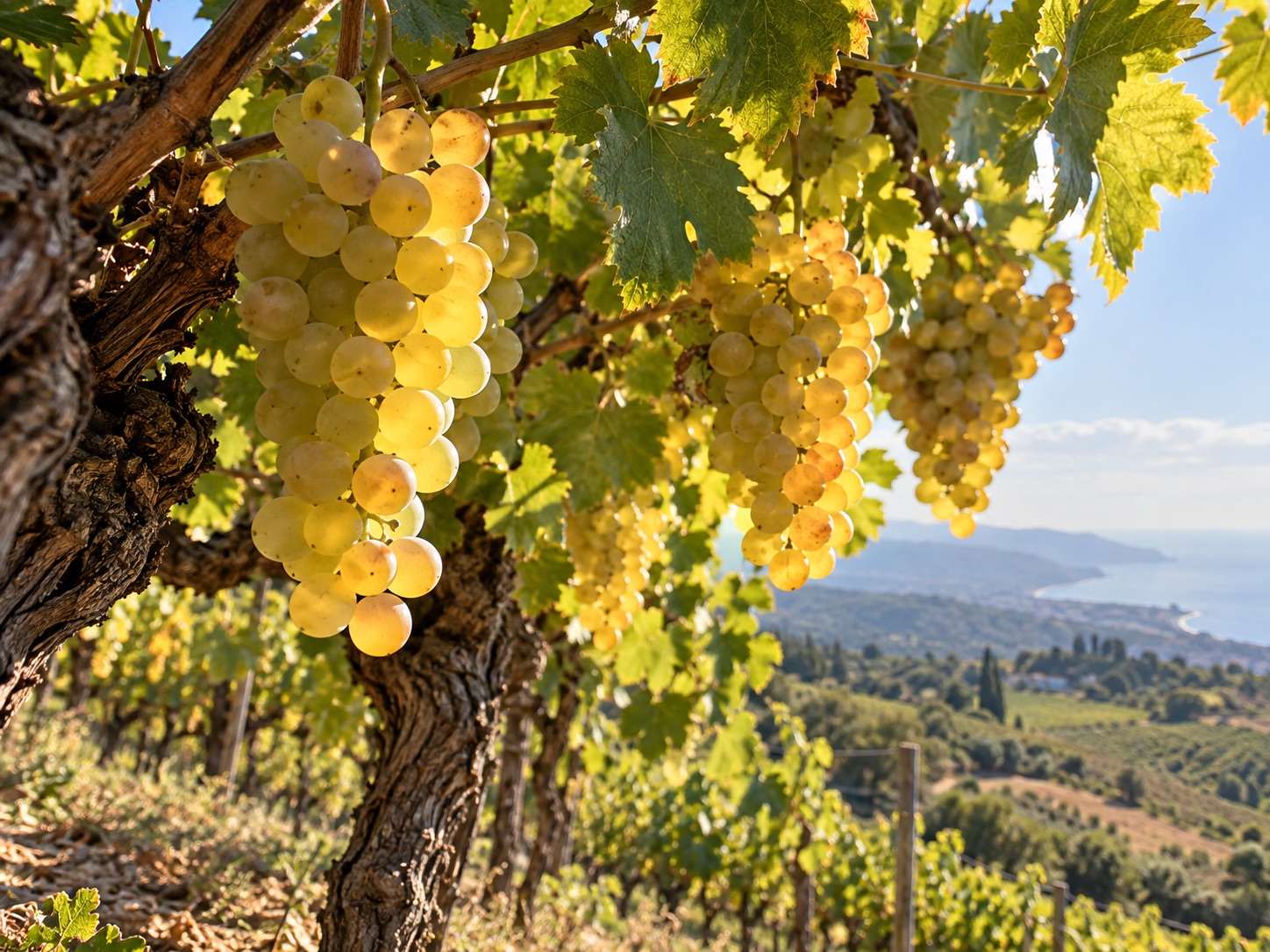
Mantonico is a small historic heritage of the Calabrian territory, long forgotten and only in recent years beginning to be appreciated again, thanks to renewed interest in native varieties. Following ancient Greek custom, it is still grown mainly as a bush vine, although newer vineyards also use trellis systems.
The vine produces medium-sized bunches with fairly thick-skinned berries that ripen to a golden-yellow colour. It is a late-ripening variety, and the dry climate of Locride combined with its resilient skin has encouraged the practice of drying the grapes on racks before fermentation to obtain sweet, concentrated wines. The grape’s naturally pronounced acidity makes it very versatile in winemaking. Even without prolonged skin maceration, Mantonico produces a wine with an intense golden-yellow colour and pronounced tannic grip.